How to Call Elk
Most elk calling advice tells you to cow call and challenge bugle. Joel Turner — a two-time world championship elk caller — called 67 bulls inside bow range last season, 38 the year before, 55 the year before that, and he does almost none of that. His system uses three calls: a distressed calf sequence, a bull-calling-cows bugle, and a location bugle. He says over 90% of the bulls he calls at come inside 40 yards. Callers running the standard challenge-bugle sequence will tell you their rate is closer to 30%.
The difference isn't volume or realism contests. It's biology — calling to a bull's instincts instead of hoping he's in the mood to fight. Joel breaks down the whole system here, and the rest of this guide walks through how to make each call and when to use it:
- Learn the calf mew first and keep every female elk sound on the calf spectrum — a distressed calf sequence called all 67 of those bulls.
- To finish a herd bull, get inside ~100 yards of his cows and give the bull-calling-cows bugle: short, raspy, no chuckles.
- Chuckles are how bulls talk to other bulls. Never chuckle at cows.
- Locate bulls before first light with a location bugle — your one job is hitting the ringing tone.
- Skip mature cow calls and challenge bugles. Cows hate other cows, and challenge bugles rely on the bull's attitude, not his instincts.
The Three Elk Calls That Matter
Elk make dozens of vocalizations, and most elk callers try to learn too many of them. Joel's system runs on three:
| Call | What it says | When you use it |
|---|---|---|
| Distressed calf sequence | "I'm lost. Come help me." | Locating elk, sound-checking terrain, and calling bulls and cows in. The workhorse. |
| Bull-calling-cows bugle | "Ladies." (A bull addressing cows directly.) | The finisher — once you're tight on a herd bull's cows. |
| Location bugle | "Stay out of my canyon." | Before first light, to make bulls give away their position. |
Just as important is what's not on the list: mature cow calls and challenge bugles — the two staples of standard elk calling advice. (Want to hear each of these sounds first? The elk sounds glossary has a real reference clip for every one.)
Why Not Cow Calls and Challenge Bugles?
Joel's analogy comes from his years in law enforcement: bar fights don't start because one guy walks in and asks another guy to fight. They start when a guy walks in and talks to the ladies. A challenge bugle is walking into the bar and talking to the dudes. Some bulls will take you up on it — elk have died to challenge bugles for decades — but you're betting on that bull's attitude that day. Talking to his cows triggers instinct, and instinct is reliable.
The cow call problem is subtler, and it's the one that quietly kills the most setups: cows hate other cows. The cows chose their herd bull, and they are not interested in some strange female showing up to share his genetics. Joel spent years on public land in Washington, tight on herds, watching what happened when other hunters threw mature cow calls into their sequences — ears forward, the whole cow herd staring, then nerves, then gone. And here's the part most hunters miss: bulls don't lead the herd, cows do. When you make the cows suspicious, they leave and take your bull with them. You'll stand there wondering why he "hung up." He didn't. His cows walked him off.
So the rule is simple: keep every female elk sound you make on the calf spectrum. Nobody in the herd is threatened by a calf — and a distressed one triggers the same instinct in elk that a crying baby triggers in a room full of people. The room empties. Everyone goes straight to the baby, no suspicion, no circling downwind to check it out first.
How to Make the Distressed Calf Sequence (Start Here)
This is the call Joel used on all 67 of those bulls, and it's where a beginner should spend their first month. It's best done on a diaphragm (mouth reed). Joel uses the Berry's Silver Dome Screamer Bull and the Golden Dome Small Bull for all of his calling.
- Seat the call. Latex forward, on the middle of your tongue, pressed lightly against the roof of your mouth. Air should only move over the reed — if it leaks around the sides, you get squeaks.
- Get a clean, high base note. Steady air from your gut, not your cheeks, light tongue pressure. Calves are high. Hold the note until you can hit it on demand.
- Add a shallow jaw drop. A mew is that note with a release — drop your jaw slightly and ease off the tongue pressure so the pitch falls away. But keep the drop shallow. Dropping the jaw too far is the single most common mistake: it pulls the pitch down out of the calf spectrum and into the mature cow zone, and now you're making the exact sound that spooks herds.
- Add the emotion. A lost calf isn't calm, and it isn't patient — it calls non-stop, moving, begging the herd to answer. Draw mews out, double them up, put urgency in them. Any variation is fine as long as it stays on the calf spectrum.
- String it into a sequence. Not one polite mew every few minutes — a connected, emotional sequence, the way an actual distressed calf sounds.
That base-note-then-jaw-drop progression is exactly how the MtnWispr Academy teaches it — one skill at a time, with a score on every attempt, including whether your mew stayed in the calf register or slid into the cow zone. "Sounds close enough to me" is how the jaw-drop habit calcifies.
How to Bugle: The Bull-Calling-Cows Bugle
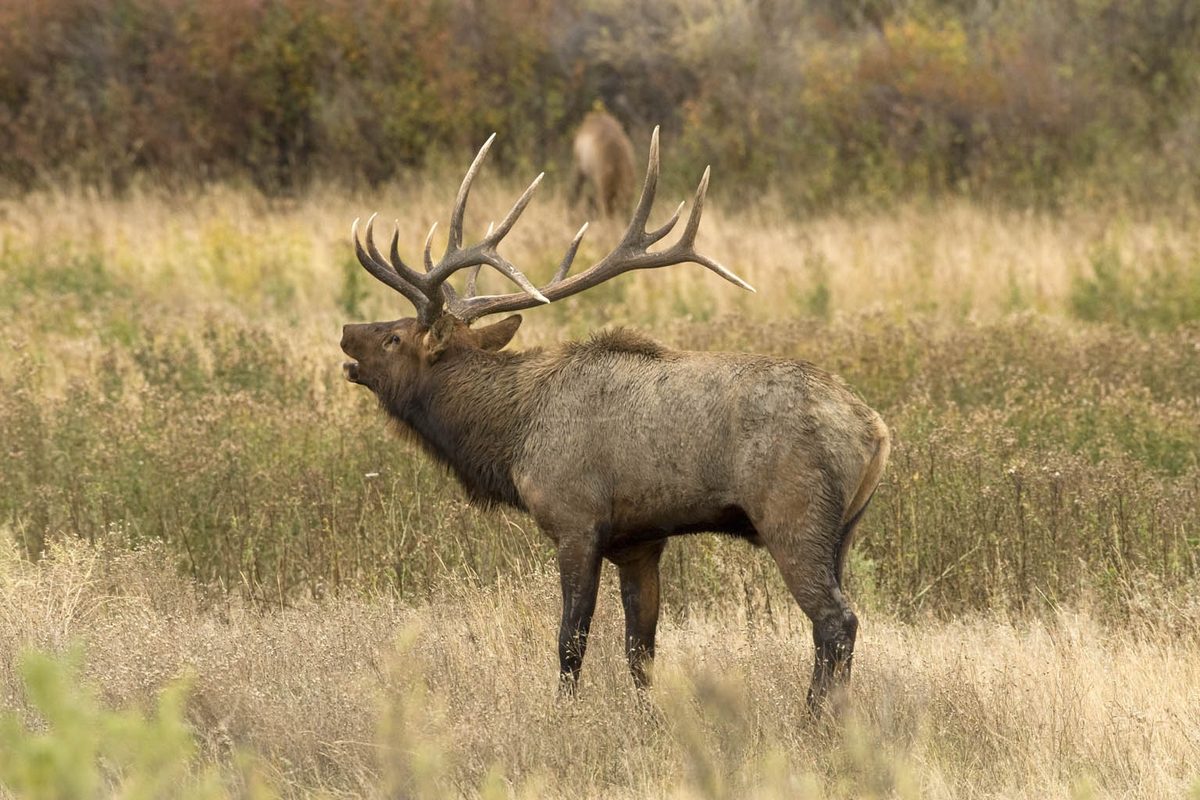
Watch wild footage of a herd bull moving through his cows and you'll notice something: when he bugles at a distant bull, he chuckles on the end. When he's talking to his own cows — chasing one, rounding them up — it's short, raspy, and there are no chuckles. Bulls chuckle at bulls. They do not chuckle at cows.
That's the entire trick of the bull-calling-cows bugle. Made from inside the herd's bubble, it says a strange bull is addressing his ladies directly — and he has to come remove you. Mechanics:
- Ease into it. Don't blast full pressure from the first instant. Air pressure and pitch build together into the high note.
- Keep it short and put rasp in it. This isn't a long, showy contest bugle. Short. Raspy. Done.
- No chuckles. If you chuckle, you just told him you're talking to him, and you've turned an instinct play into an attitude play.
- End it clean. A real bull cuts his bugle off; hunters let it sag and trail away like a siren winding down. Build in, cut sharp.
One more from Joel's playbook: you can bugle shockingly close to cows — he's done it from 10 yards and they barely lift their heads.
The Location Bugle: Finding Bulls in the Dark
The location bugle is how you find bulls to hunt in the first place — sent out at 3 a.m. from a landing or ridge when the woods are quiet and the only things making noise are elk. It's a bull's warning to other bulls: stay out of my canyon. Bulls answer it because they want to send the same warning back.
Here's what Joel figured out in 1999, listening to bulls ignore other hunters' picture-perfect bugles and answer his: realism isn't what makes a location bugle work. The ringing tone is — a specific frequency that rings your ears and carries farther than anything else in the bugle. Elk evolved on the prairie; they're built for sounds that reach. Your one job in a location bugle is to hit that ring.
You find it by slowly increasing tongue pressure on the reed through the high note. At a certain pressure the reed's vibration changes character (slow-motion photography shows the latex snapping into a figure-eight undulation) and the tone suddenly rings. You can feel the buzz change in your mouth. Practice finding that spot on demand — some nights it takes a moment of hunting for it inside the call, and that's fine. Ring beats pretty.
When to Call Elk: The Actual Sequence
Here's how the three calls chain together on a real morning:
- Before light: location bugle from a vantage. A bull answers — mark him. No answer anywhere? Different spot.
- Take inventory with a distressed calf sequence. If he bugles again from the same spot, he has cows — he's not leaving them. Now you know exactly which play to run, and you haven't made a single suspicious sound.
- Ghost the herd. Stay off them while they feed and move. You'll hear the roundup bugle — higher, fluty, no rasp, no chuckles — as he pushes his cows along. Lose track of them? Another distressed calf sequence: to the herd, you're a lost calf, and he'll readily bugle to call you back in.
- Wait for the bedroom. When the bugles shift from fluty roundup bugles to short raspy bull-calling-cows bugles — usually 8 or 9 a.m. — the herd has bedded. Get on the same contour as the elk so thermals aren't dragging your scent through them.
- Get tight on the cows. Not the bull — the cows. Inside 100 yards; 60–70 gets immediate responses. Then get completely set: feet, shooting lane, arrow nocked, release on. Then call.
- Give the bull-calling-cows bugle. If he answers with chuckles, he's coming — he's talking directly to you now. If you hear him stop to rake a tree on the way in, bugle right over the top of his display. Now he's coming to kill you. They walk in puffed up, head shaking — be ready before you ever make the sound.
- Five minutes, nothing? You're not close enough to the cows. (Or it's late September and his cows are already bred, in which case stop bugling and pull him with the distressed calf instead.) And in open country where you can't close the gap: calf-call the cows to you. The bull follows his herd.
Note what's missing from all of this: sitting in one spot running a calling routine every 20 minutes and hoping. Joel also uses the distressed calf as a sound-check while covering ground — send a sequence out to the reach of the next terrain feature; if no mew, no bugle, and no sticks breaking come back, walk on and check the next drainage. Elk that hear a distressed calf answer it. Silence means don't spend your morning in there.
Which calls are working also shifts with the season — early bulls behave differently than rut-locked herd bulls. See when do elk rut for the timeline and what to call in each phase.
Common Elk Calling Mistakes
- Making mature cow sounds. The big one. You make the cows suspicious, the cows leave, the cows take the bull. Stay on the calf spectrum.
- Chuckling. Chuckles are bull-to-bull talk. Adding them to a bugle means you're relying on a bull's attitude to fight rather than his instincts.
- Dropping the jaw too far on mews. The most common mechanical fault — it slides a calf mew into the cow zone. If your "calf" sounds mature, you've built the spook-sound into your muscle memory.
- The fading bugle. Trailing off at the end instead of cutting it clean. Real bulls end sharp.
- Practicing without feedback. Your own ear normalizes your own sound. Guys send what they think is a great calf sequence to a coach and hear back: too deep, jaw dropping too much, more emotion. Repetition without a reference doesn't make you better — it makes your mistakes permanent.
How to Practice Elk Calling
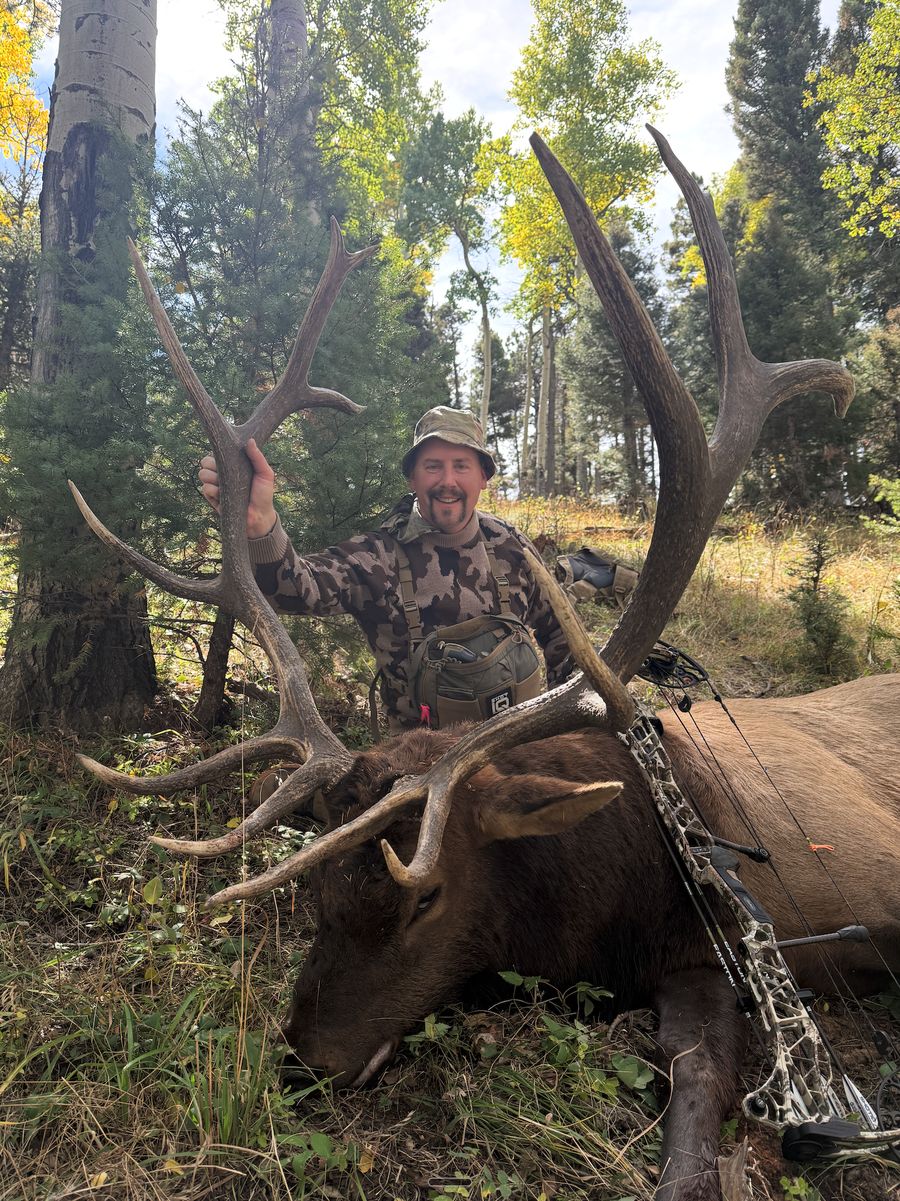
Here's the uncomfortable truth: you only get to field-test your calling for a few weeks a year, and you don't get many at-bats — a typical public-land hunter might get two or three bulls that bugle at him all season. If you make the wrong sound at one of them, that encounter is over. Everything is decided in the truck, the shower, and the garage between now and opener.
What works:
- Short and daily. 10–15 minutes a day builds the tongue and air control. One marathon session a week doesn't.
- One skill at a time. Base note until it's clean. Then the shallow jaw drop. Then the full mew, the sequence, the bugles. Stacking a new skill on a broken foundation just builds a taller broken thing.
- Check the register, not just the sound. The question isn't "does this sound like an elk" — it's "does this sound like a calf, or did I drift into the cow zone." That distinction is nearly impossible to judge from inside your own head.
- Get real feedback. For years the only way was sending clips to a better caller and waiting days for "too deep, try again." That loop is too slow to build a call by September.
A coach in your pocket. 365 days a year.
Record a bugle, cow call, or mew. Get an instant score on pitch, tone, and technique — and a 2x world champion trained correction on exactly how to improve.
Test My Call // Your first test is free — a quick bull-to-cow bugleCurl your lip and drive the growl from your throat through the close — you're fading to clean reed where a bull keeps the rasp.
Frequently Asked Questions
How long does it take to learn to call elk?
Faster than you'd think. A passable calf mew comes in a weekend, and a couple of focused weeks with real feedback is enough to walk into the woods with a distressed calf sequence that pulls elk — plenty of hunters dial it in the two or three weeks before opener. More runway makes bugles and finer control easier, but the biggest jump comes from practicing with feedback instead of blind, no matter when you start.
What's the easiest elk call for beginners?
The calf mew. It's the simplest sound to make, and as a distressed calf sequence it's also the most effective call in the woods — no elk is suspicious of a calf. Watch the jaw drop: too deep and you're a cow, not a calf.
Should you use cow calls?
Mature cow calls are riskier than most advice admits. Cows chose their bull and don't welcome strange females; suspicious cows leave and take the bull with them, because cows — not bulls — lead the herd. Keep your female elk sounds on the calf spectrum.
What is the bull-calling-cows bugle?
The bugle a herd bull uses when talking to his own cows: short, raspy, no chuckles. Delivered from inside about 100 yards of the cows, it forces the herd bull to come remove the stranger addressing his ladies. If he answers you with chuckles, he's on his way.
How often should you call while hunting?
Depends on the call. The distressed calf sequence is continuous by design — real lost calves call non-stop — and it doubles as a sound-check as you cover ground. The thing to ration isn't calling; it's wrong sounds. One mature cow call or chuckle at the wrong moment ends a setup.
Can you practice elk calling at home?
Yes — home is where calls get built. Just don't practice blind: record yourself, compare against real elk, or use a training app that scores you, so daily reps compound instead of grooving a too-deep jaw drop into muscle memory.
Where to Go From Here
Pick the calf mew. Give it fifteen minutes a day for two weeks with real feedback, and you'll walk into September with a call that pulls elk instead of educating them. If you want the score-every-attempt version of that plan, the free bugle test takes about two minutes — the quickest way to feel how it works before you put in the reps.